 Cengiz Zopluoglu, Associate Professor, joined the faculty in the Department of Educational Methodology, Policy, and Leadership at the University of Oregon in June 2020 after serving seven years in the Research, Measurement, and Evaluation program at the University of Miami. Dr. Zopluoglu received his Ph.D. in Quantitative Methods in Education program from the Department of Educational Psychology at the University of Minnesota. He was teaching math in a middle school in Turkey and moved to the U.S. in 2007 after he was awarded a highly competitive scholarship from the Turkish Ministry of National Education for graduate study in the U.S. in educational measurement.
Prior to his faculty experience, Dr. Zopluoglu held research assistant positions with the Quantitative Methods in Education program and Office of Research and Consultation Services at the University of Minnesota, and also had the privilege of doing psychometric research at the Minneapolis Public Schools in Minnesota and ACT, Inc. in Iowa. Dr. Zopluoglu has taught advanced-level graduate courses on psychometrics and statistical methodology including General Linear Models, Item Response Theory, Measurement and Psychometric Theory, Categorical Data Analysis, and Data Analysis with R in Educational and Behavioral Research. Dr. Zopluoglu has substantial experience in providing statistics and measurement consultation to faculty and students on their projects.
His methodological publications have appeared in leading measurement and statistics journals including Applied Psychological Measurement, Behavior Research Methods, Educational and Psychological Measurement, Multivariate Behavioral Research, Psychometrika, Psychological Methods, and Structural Equation Modeling as well as in journals focusing on applied research. His most recent work and personal blog can be accessed from his personal website at cengiz.me Cengiz Zopluoglu, University of Oregon
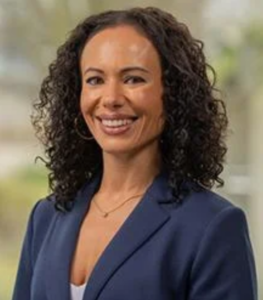 Rhonda Nese, is an Associate Professor in the Department of Special Education and Clinical Sciences at the University of Oregon and the Director of the Nese Lab. She is also a Principal Investigator (PI) within the Prevention Science Institute, a multidisciplinary research institute at the University of Oregon. Her research involves equitable intervention delivery within a multi-tiered behavior support framework focused on preventative practices, including addressing implicit bias in school discipline, effective classroom behavior management strategies, bullying prevention, and alternatives to exclusionary discipline practices. Dr. Nese serves as the PI on projects to develop and test the effectiveness of the Inclusive Skill-building Learning Approach (ISLA), an instructional and restorative alternative to exclusionary discipline, funded by the Institute of Education Sciences (R305A180006) and the National Institutes of Health (1R01DA059401-01). She is also Co-PI on additional federally-funded projects to identify factors that predict implementation and sustainability of evidence-based practices, to develop technology to improve online learning for educators, and to develop and validate an automated scoring system for oral reading fluency. Dr. Nese is the recipient of the 2022 Presidential Equity Award from the NorthWest PBIS Network and the 2022 Outstanding Early Career Award from the University of Oregon, the UO’s highest award for early career faculty to recognize and celebrate an emerging and significant record of scholarship and research. Rhonda Nese, University of Oregon
 Akihito Kmata is the Executive Director at the Center on Research and Evaluation (CORE). Dr. Kamata’s primary focus is on psychometric model development for oral reading fluency (ORF) assessment data, through three grant projects funded by IES: U.S. Department of Education. Previously, Dr. Kamata did pioneering work on multilevel item response theory modeling, where item response data from individuals are nested within group units, such as schools.
He is currenty a Professor at Southern Methodist University (Department of Education Policy & Leadership, Center on Research and Evaluation, Simmons School of Education & Human Development; Department of Psychology, Dedman College of Humanities and Sciences). He was a was a faculty member at the University of Oregon and Florida State University.
Dr. Kamata’s primary research interest is psychometrics and educational and psychological measurement, focusing on implementation of item-level test data analysis methodology through various modeling framework, including item response theory, multilevel modeling, and structural equation modeling. He did pioneering work on multilevel item response theory modeling, where item response data from individuals are nested within group units, such as schools. This line of work is represented by his 2001 publication in Journal of Educational Measurement, a special issue on multilevel measurement modeling in Journal of Applied Measurement in 2005, and several book chapters on the topic, including a recent chapter in the Handbook of Advanced Multilevel Analysis (2011). Other recent interests include developing effect size measures for testlet modeling, developing reliability measures of growth trajectory for longitudinal data modeling, and Bayesian inference for complex psychometric models. Akihito Kmata, SMU
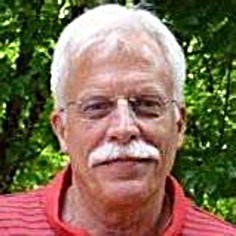 Keith Hollenbeck, PhD, (retired) is the former University of Oregon Director of Administrative Licensure Programs for the Department of Educational Leadership in the College of Education. His teaching and administrative experience range from primary education to collegiate teaching and from general or regular education to special education. His doctorate is in special education with an emphasis in curriculum design and assessment.
Keith has interest in administrator and teacher-leader training, large-scale statewide assessment research, district-wide curriculum-based assessment, and institutionalizing empirically validated effective curriculum design and teaching practices. He is an is affiliate of Behavioral, Research, and Teaching (BRT) at the University of Oregon.
Education: Ph.D., 1996, University of Oregon, M.S., 1981, University of Oregon, B.A., 1976, Humbolt State Vita
 Paul Yovanoff (retired) was a Professor and Director of the Ph.D in Education Program at Southern Methodist University in Dallas, TX. He completed his Ph.D. in Educational Psychology with an emphasis in psychometric theory, statistical decision analysis, and behavioral research methods. Prior to receiving his Ph.D. in 1992, Paul was a special education teacher and received a master’s degree in special education. He has remained active in the field as a professor of educational research and measurement methodologies applied in special education contexts. In addition to numerous publications and conference presentations, Paul consults routinely with government and research institutions. Current research interests include psychometric modeling of assessments for special populations, specification of optimal cut-scores for classification decisions, and culturally sensitive measurement and assessment for educational decisions.